
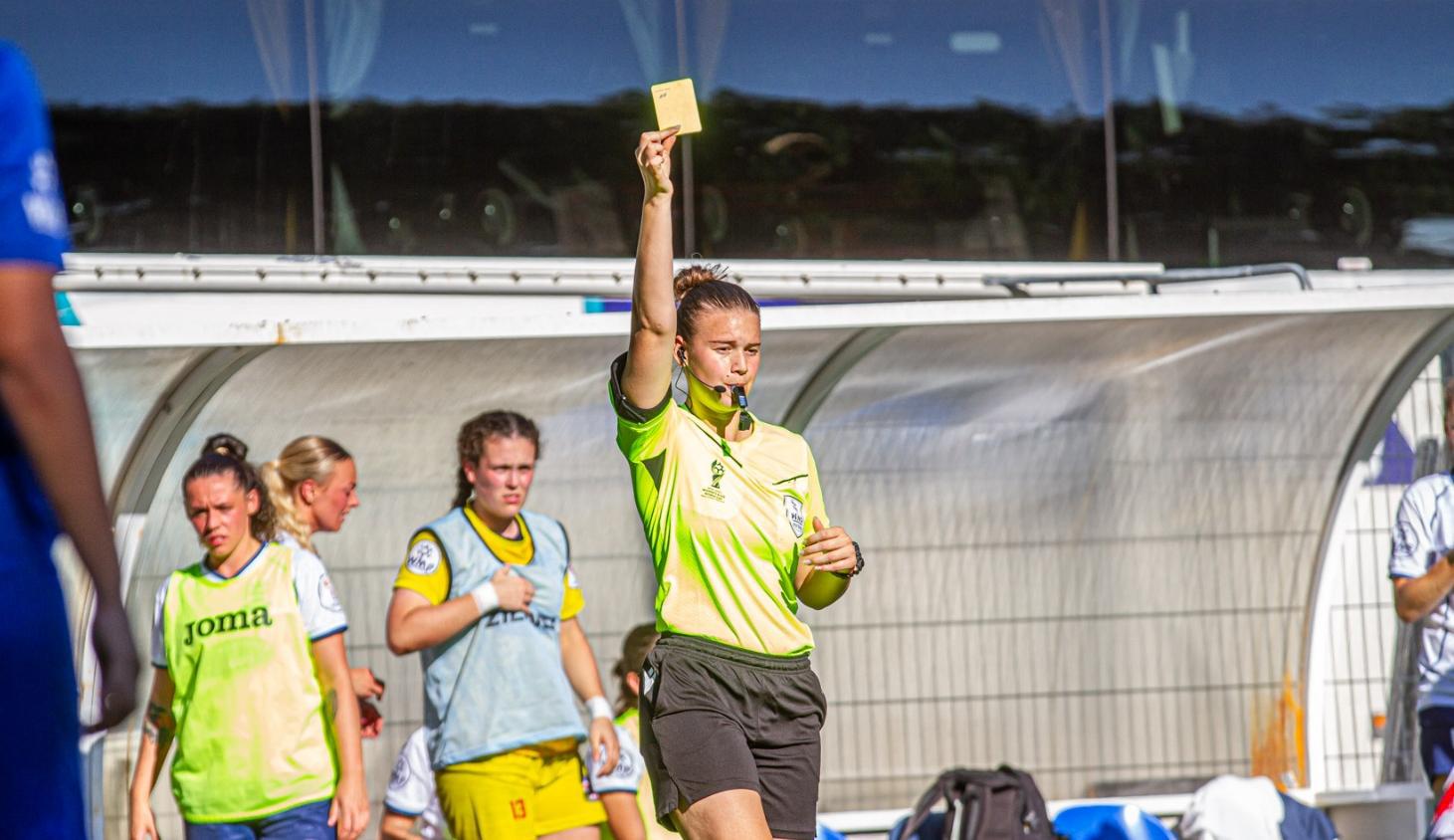
Ahead of the WMF Elite & Continental Referee Course: Spotlighting the Youngest WMF International Referee – and She’s Breaking Barriers!
From discovering her passion for minifootball to officiating on the international stage, Milica Bosnic shares her journey, experiences, ambitions, and message to the next generation of referees.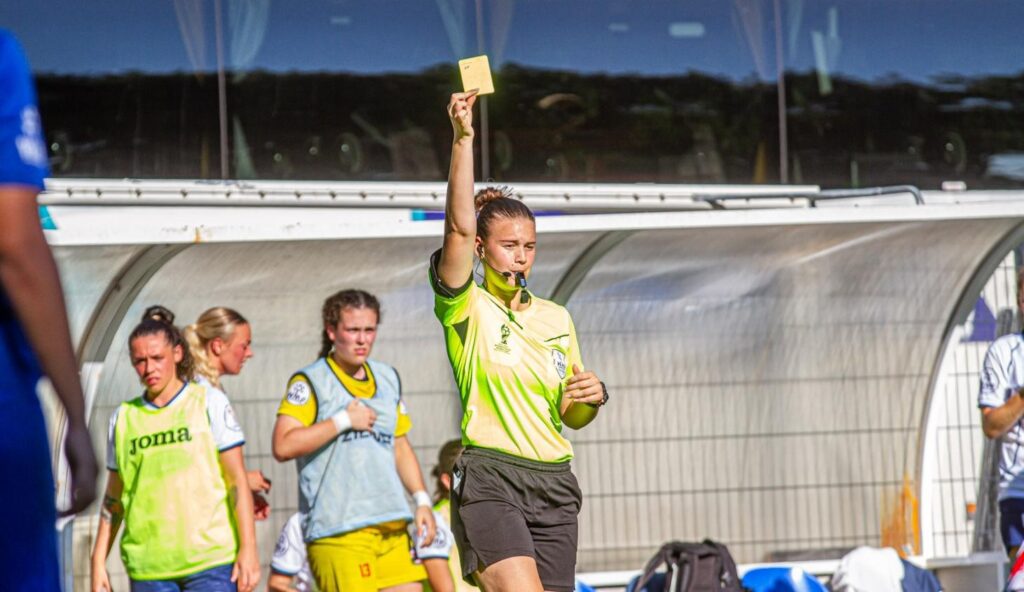
1. Can you take us back to the beginning? How did your journey as a minifootball referee start?
My refereeing career began on the traditional football pitch, where I first fell in love with the profession. After two and a half years of refereeing traditional football, I started officiating minifootball matches alongside a friend at a sports centre in my city. From the very first match, I was captivated by the game. Minifootball was faster and more dynamic, requiring me to adapt quickly as a referee. I had to think faster and make split-second decisions because the pace of the game was much quicker than that of traditional football. That was something I truly enjoyed. Before I knew it, minifootball had become an integral part of my everyday life.
2. What made you choose refereeing, and when did you realise this was something you wanted to pursue seriously?
I have always been someone who aspired to be an authority on the pitch. Even during my playing career, I tried to be the person who motivated and led my team. That was truly something that fulfilled me: the feeling that I was capable of motivating and guiding my teammates.
Refereeing allowed me to express my attitude and temperament even more. As a referee, you are the person who makes decisions on the pitch, directs the course of the game, and manages what happens during the match. When I realised this through refereeing, it became the turning point in my decision to pursue it more seriously and develop further towards becoming a football referee.
3. Did you ever imagine that you would reach the international level at such a young age?
Honestly, an international career was not something I expected to achieve at such a young age. I had always dreamed of becoming an international referee, but at the same time, it seemed somewhat distant because I noticed that all international referees were significantly older than me. I believe I was extremely lucky to have my parents by my side. Regardless of my age, they were already preparing me for that journey, which ultimately proved to be the right decision, as my journey towards international refereeing began much earlier than any of us had expected.
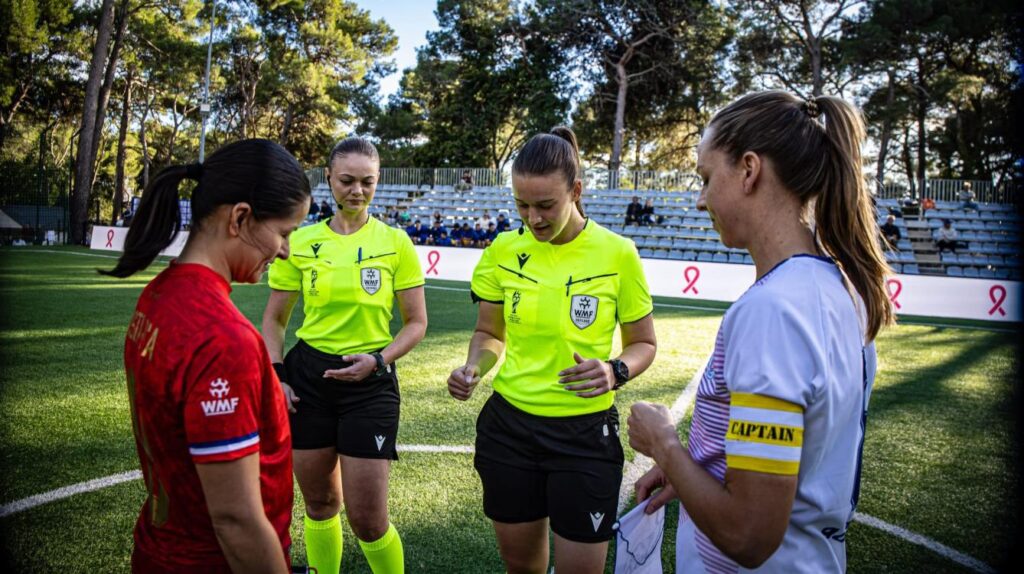
4. What does it mean to you to officiate at the international level at just 18 years old?
First of all, it is a great honour for me to be someone who is truly making history. Being a referee at international competitions at just 18 years old is a great privilege, but it also comes with great responsibility. I also believe that the entire WMF organisation made a very brave decision by giving such a young referee the opportunity to prove herself, gain new experiences, and acquire new knowledge. For that, I am truly grateful to them.
This new experience means a great deal to me on a personal level because I have been given the opportunity to present myself as a young person who already has an established attitude, her own refereeing style, and a truly strong mentality.
5. When you think about how far you have come, what makes you feel most proud?
What actually makes me the proudest is the way I adapted to a new environment and demonstrated my attitude, confidence, and seriousness from the very first match, especially considering that people generally do not expect these qualities from an 18-year-old girl. I am proud of the way I handled the pressure, embraced all the new things I had to learn, and adapted to a demanding pace of work that was relatively new to me.
6. As one of the youngest referees on the international stage, do you ever feel extra pressure to prove yourself?
Of course, I felt additional pressure and a strong desire to prove myself. I believe this is an essential part of entering any new environment: the desire to prove yourself, present yourself in the best possible light, and be accepted by the people around you as part of the team.
Despite that pressure, I was very lucky when it came to the team I worked with. Although there was already a group of colleagues who had been working together for a long time, they truly accepted me in a way I had not expected. From the very first day, I felt as though I had been part of their team for years, which certainly contributed to my good performance later on.
I would really like to take this opportunity to thank all my colleagues who made my first two competitions so pleasant. After getting to know them, every time I worked alongside them on the pitch was an absolute pleasure.
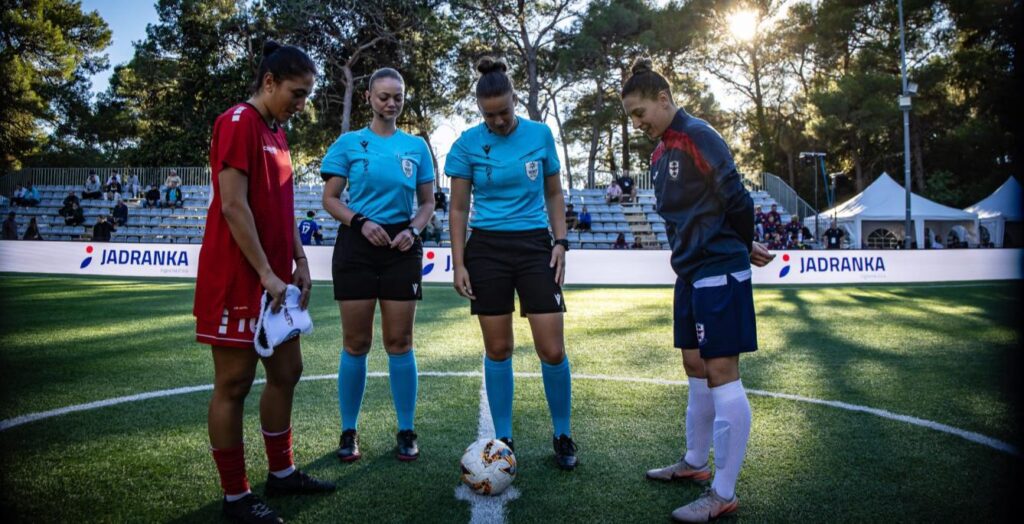
7. What has the experience of officiating international minifootball taught you so far?
My experience so far as a minifootball referee has taught me that the most important thing is to maintain good communication with colleagues on the pitch. From my first Champions League match in Spain to the Women’s World Cup and U23 World Cup in Croatia, I always tried to establish the best possible relationship with the colleague I was working alongside during each match.
My colleagues have made a tremendous contribution to my development, teaching me a great deal throughout these two competitions. For that, I am especially grateful to all of them.
8. What has been the biggest challenge in your journey, and how did you overcome it?
I believe that the biggest challenge for me personally, apart from the challenges that naturally arise on the pitch between players and colleagues, was being separated from my loved ones for the first time. Being far away from home meant that, for the first time, my performance, concentration, and energy depended entirely on me. That was the biggest challenge I faced and required me to approach everything with the utmost seriousness.
Of course, I managed to overcome this challenge through conversations with both my parents and the people around me. That is why I am especially happy and proud, because, for the first time, I stepped outside my comfort zone and experienced the responsibility and weight that my job truly carries.
9. Referees often have to make difficult decisions in seconds. How do you stay calm and confident under pressure?
When it comes to working under pressure and making split-second decisions, I believe this is one of the most demanding aspects of my job. Self-confidence plays a key role here. Although I am only 18 years old, I believe this is one of my strongest qualities. I love pressure, and I enjoy demanding matches that require difficult decisions.
I developed this quality when I was still a player. Depending on the position I played on the pitch, I learned what it meant to perform under pressure, with spectators, teammates, and coaches all focused on me and my next move. Now, as a referee, I draw on the mentality and way of thinking I developed as a player to make difficult decisions confidently and in a split second. That is actually the part of refereeing I truly enjoy.
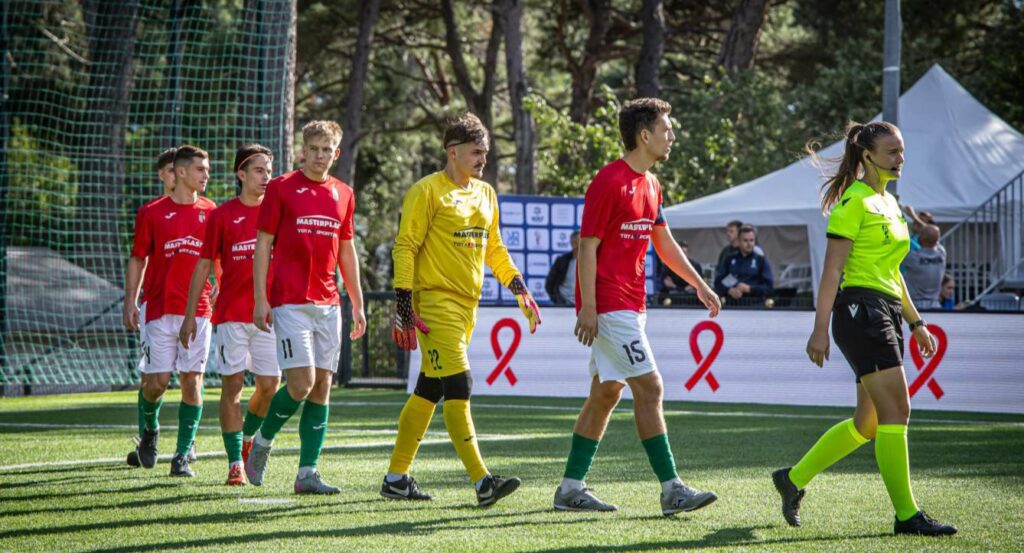
10. Have you ever faced a situation where you had to earn people’s respect despite your age?
I believe there is no single, specific moment when I had to earn the respect of the people around me. Every moment I spend on the pitch, as well as every interaction I have with people off it, is an opportunity to earn that respect. The way you cooperate with others and how you behave in the situations you face are what truly earn you respect.
I believe that, regardless of my age, both the colleagues I worked with and the players on the pitch took me extremely seriously from the very beginning. I also believe that the players genuinely respected the decisions I made on the pitch, regardless of whether those decisions were in their favour or not, which makes me especially happy.
11. Who has supported you the most throughout this journey, and what has their support meant to you?
The greatest support throughout my development journey has come from my parents and my boyfriend. The sense of peace they bring me through their advice, conversations, and care is truly the most precious thing to me. Like everyone else, I have my ups and downs, but what keeps me grounded and motivates me to continue developing towards the goal I want to achieve is the support they give me.
For that, I will be forever grateful to them, because without their support, I certainly would not have reached the position I am in today.
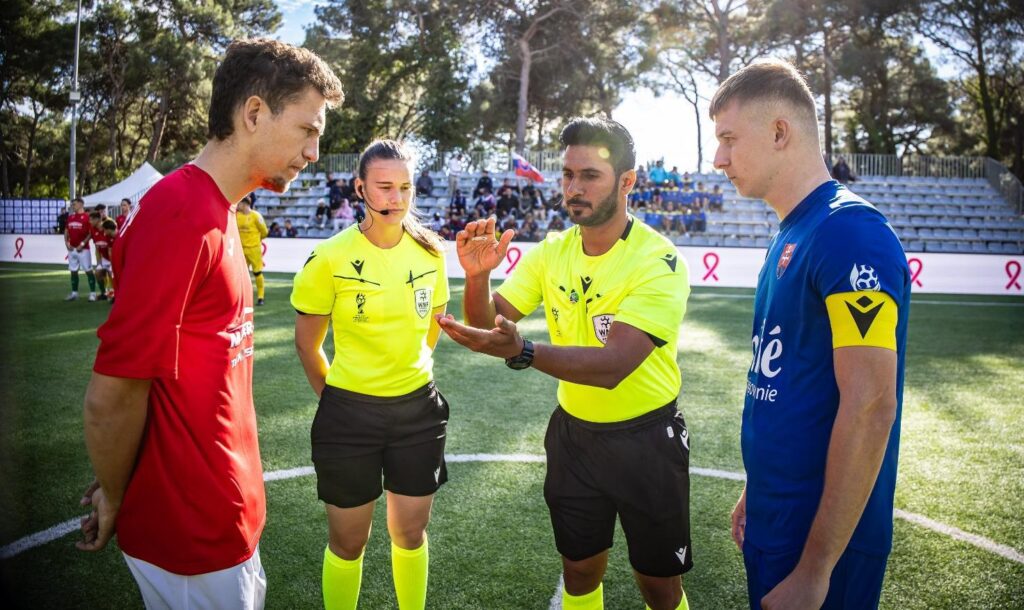
12. What does a typical day of preparation look like before an important match?
Like all my colleagues, I also have my own routine before every important match. I believe that mental preparation is the most important part. I focus on what the match might bring, how I need to position myself in relation to the players from the very first minute, and how I will communicate and exchange information with my colleagues.
These are all things I think about while preparing for the match, and I pay special attention to them to ensure that I deliver the best possible performance on that day.
13. What is one thing about being a referee that people rarely see or understand?
One thing I have noticed that people who follow football often understand the least is the pressure referees experience. The feeling that you and your colleague are alone as a team on the pitch, with the eyes of the entire stadium focused on you and the decisions you make, is one of the most challenging aspects of the job. I believe this is what people understand the least.
Every gesture, every signal, and, most importantly, every decision made by a referee is closely watched on the pitch. This constant scrutiny is what creates the greatest pressure for a referee
14. Outside the pitch, who is the person behind the whistle?
Although the pitch is where I spend most of my everyday life, outside of refereeing, I am a student at the Faculty of Technical Sciences. Education has always been a key part of my life. I believe it is very important for young people to continue improving themselves in all areas, and for that reason, I place a great deal of focus on my education as well.
When I put my studies aside, I am a relaxed and cheerful person who loves socialising, having fun, and talking with people. Finally, what truly makes me who I am is the smile I always wear on my face, because I genuinely enjoy everything I do in life.
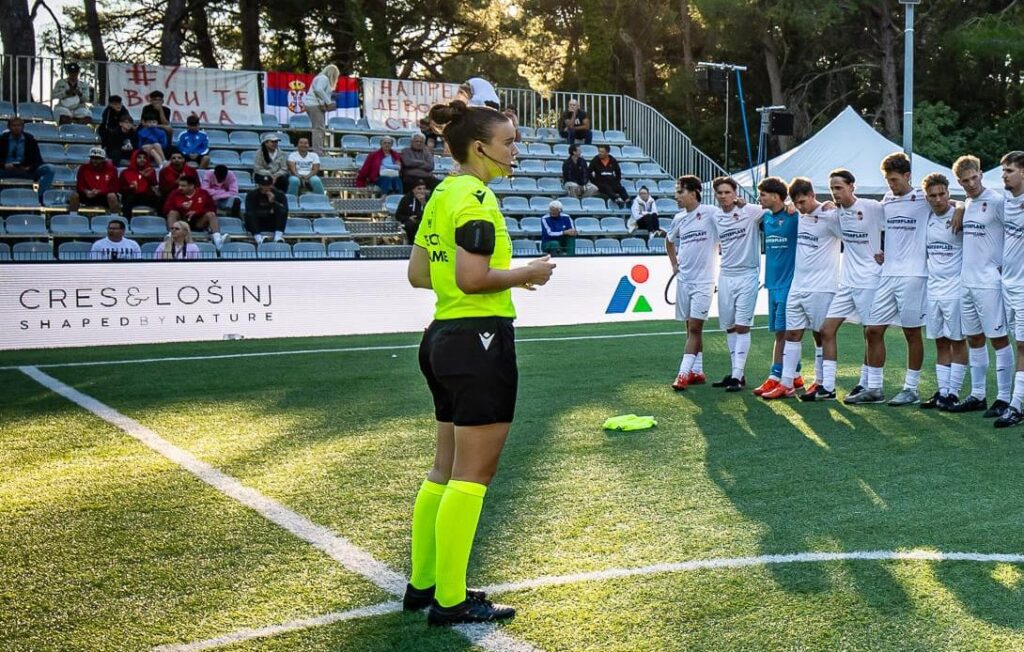
15. You have already reached the international stage at 18. What is the next milestone you want to achieve?
My career as a minifootball referee has only just begun, which is why I believe I still have plenty of room to grow, progress, and improve. Accordingly, the next goal I have set for myself is to continue learning, developing, and becoming a better referee.
After experiencing two major competitions – the Champions League in Spain and the World Cup in Croatia – I have gained even greater motivation to push myself harder and put more effort into achieving the goals I have set for myself.
16. Is there a particular international tournament or level you dream of officiating at one day?
After officiating at the the Women’s and Men’s Under-23 World Cup in Croatia, I developed a strong desire to officiate at the senior Men’s World Cup. I believe this would be another exceptional milestone in my career, as well as an important step in my personal development. That is why I am ready to work even harder on myself, continue learning, and do everything I can to turn that dream into reality.
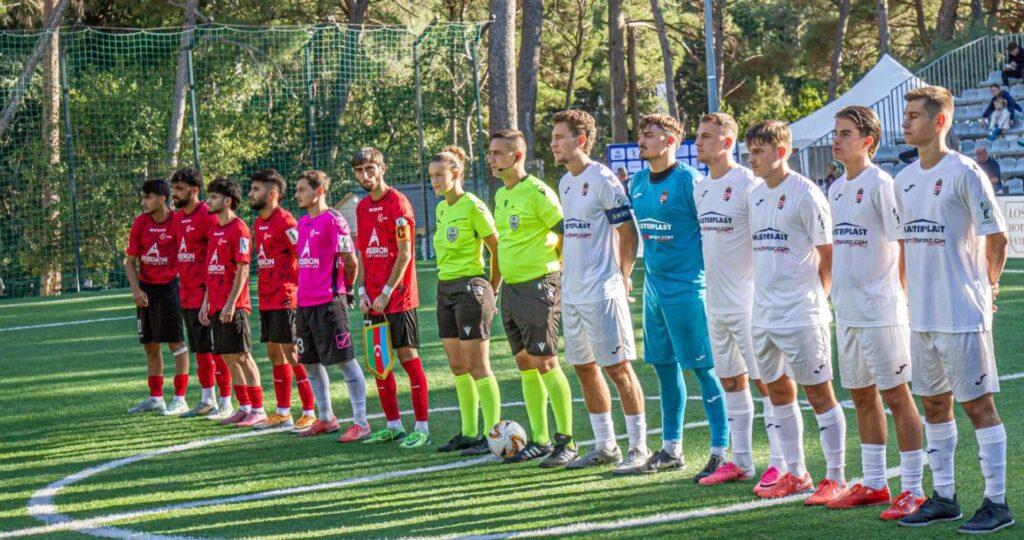
17. How do you hope to contribute to the future of minifootball refereeing?
Above all, I hope that, through my example, I will inspire many young referees to work on themselves, expand their knowledge, and pursue their goals. I believe this is exactly what colleagues should do: encourage younger referees, support one another, and work together to build a path that others can follow in the future.
18. What message would you give to young people who dream of becoming referees but feel that they are too young to start?
My message to all young people who want to become referees is this: age is not the deciding factor in our profession; what truly matters is what you carry within yourself. The way you understand the game, make decisions, handle pressure, and establish communication with players are the things that matter most.
I would encourage all young people to follow their dreams, continue working on themselves, and fight for what they want to achieve. Believe in your abilities, trust your potential, and never give up on your ambitions, because dedication and hard work are the keys to succeeding in whatever you set out to do.
19. Years from now, when you look back at this stage of your career, what do you hope people will remember you for?
I would like people to remember me as a professional and serious referee, but also as a cheerful, smiling young woman who is eager to improve herself and learn more about what she loves most: the game of football.
I hope that, when people look back in a few years and remember me, they will see how much I genuinely enjoyed the matches I refereed. I want them to remember the balance between professionalism and seriousness on the pitch and the joy that every match, in which I shared the pitch with the players, brought me.
20. If you could inspire the next generation of minifootball referees with one message, what would you tell them?
My message to future generations is simple: professionalism and seriousness are among the most important qualities in our profession, but never let that seriousness take away your opportunity to enjoy every moment you spend on the pitch.
I would also like to encourage young women to pursue refereeing with confidence, believe in their knowledge and abilities, and never allow prejudice to stand in the way of their ambitions in football. Believe in yourself, keep learning, and have the courage to pursue the future you dream of.
